
Visiting Favignana: The Queen of the Aegadian Isles
Favignana: The Great Butterfly Upon the Sea
Hotel Aegusa is set in the heart of Favignana town—the perfect base for exploring the queen of the archipelago. Discover stunning beaches and hidden coves, or traverse scenic nature trails by foot or by bicycle.
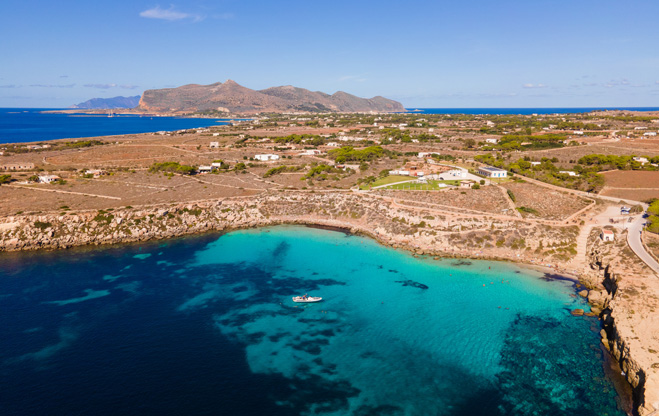
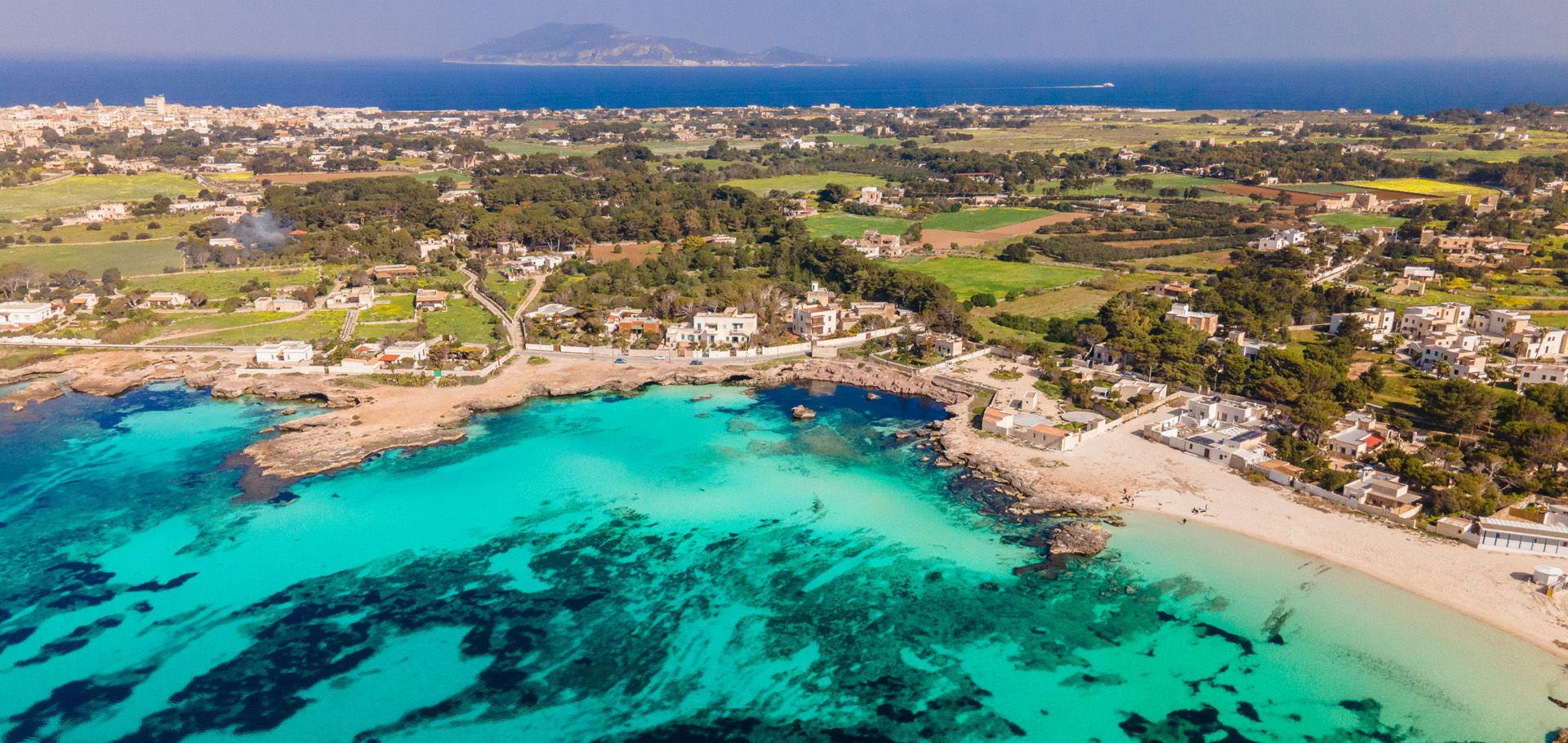
Located 15 miles off the western coast of Sicily, the Aegadian archipelago comprises the islands of Favignana, Levanzo, and Marettimo, alongside the smaller islets of Maraone and Formica. Favignana, the most renowned and visited of the three, is a breathtaking mosaic of emerald bays, whitewashed houses with blue doors, rugged coastlines, ancient quarries, and secret caves. Hotel Aegusa enjoys a strategic position right in the historic town centre. Below, we present a brief guide to Favignana, sharing the island’s most captivating highlights with our guests.
Exploring the Town & Historic Centre
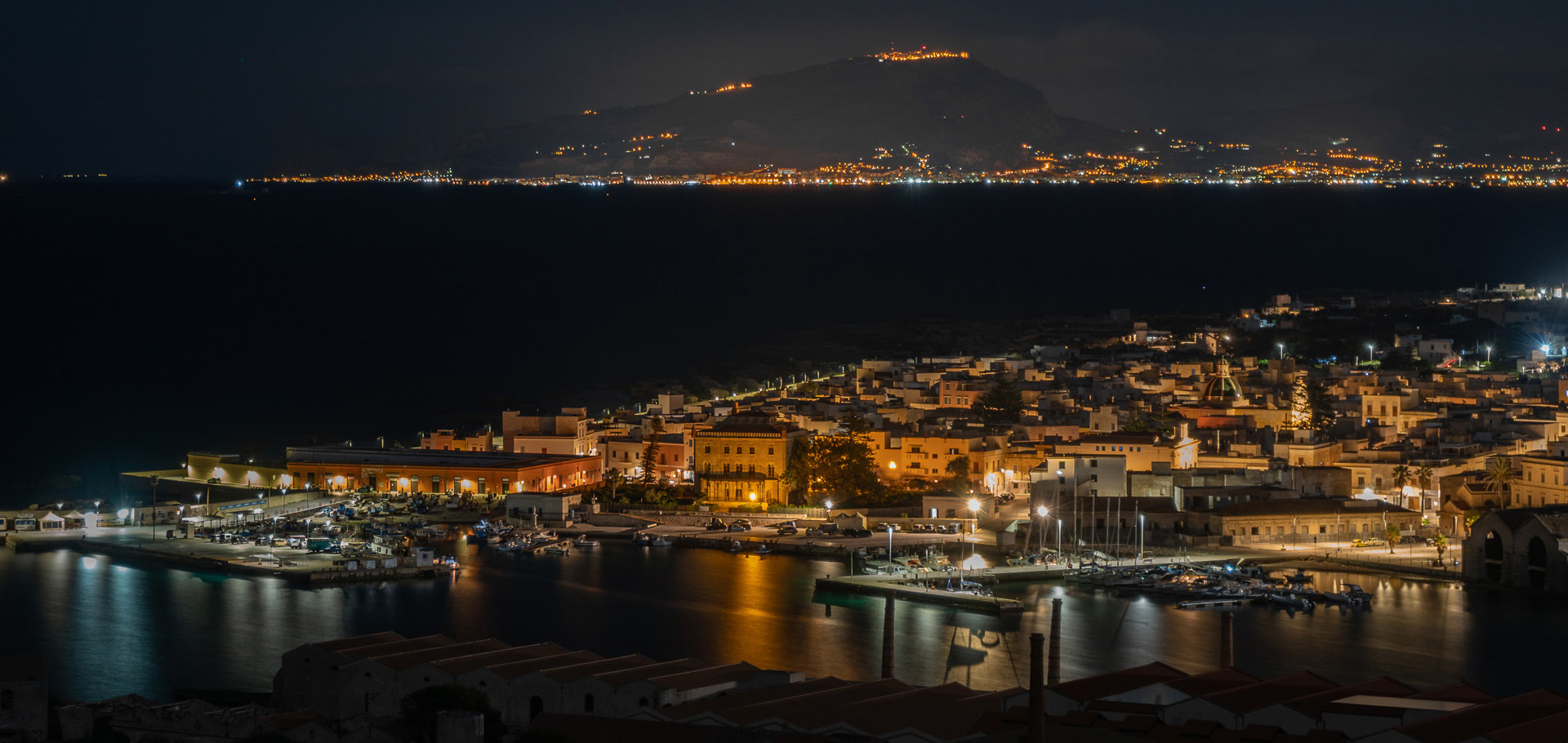
Your journey through Favignana begins in its oldest quarter, S’Anna. This labyrinth of narrow alleys and traditional houses was designed with the "comfort" of the local women in mind, fostering a unique sense of community. The shared courtyards were the social hubs where families awaited the men returning from the sea, the tuff quarries, or the fields. As you walk through, look for steep staircases, decorative ceramics, and exposed tuff stone vaults. Hidden behind each house lies a sunken garden (giardino ipogeo), a private oasis where residents once cultivated their own vegetable plots.
The second step is chiesa Matrice (o Madrice). Dominating the town’s main square is the Chiesa Matrice, built in 1759. Designed by architect Don Luciano Gambina and commissioned by Don Giovanni Luca, Marquis of Pallavicino, its facade features a magnificent Baroque wooden portal. Above, a stained-glass window depicts the Immaculate Conception, mirroring the image on the High Altar. The church is built in the shape of a Latin cross, uniquely measuring 33 metres in length—exactly matching the 33 kilometres of the island’s coastline. Inside, don't miss the 18th-century wooden crucifix from the Trapani School and the exquisite 17th-century Spanish marble statue of the Madonna.
Third step is Palazzo Florio A true jewel of Favignana, Palazzo Florio (1878) is a masterful blend of Neo-Gothic and Liberty (Art Nouveau) styles. Designed by the renowned Damiani Almeyda, its stately exterior hides an interior of refined elegance, featuring intricate wrought-iron work from the Florios' own Oreta foundry. Once the residence of the elite Florio family, the palace hosted illustrious guests during the Mattanza (the traditional tuna harvest). It was also a sanctuary from the stresses of life; Donna Franca Florio sought refuge here following the tragic loss of her daughter, Giovanna. Today, the beautifully restored palace houses the municipal library, the tourist information point, and a fascinating shell collection and Antiquarium.
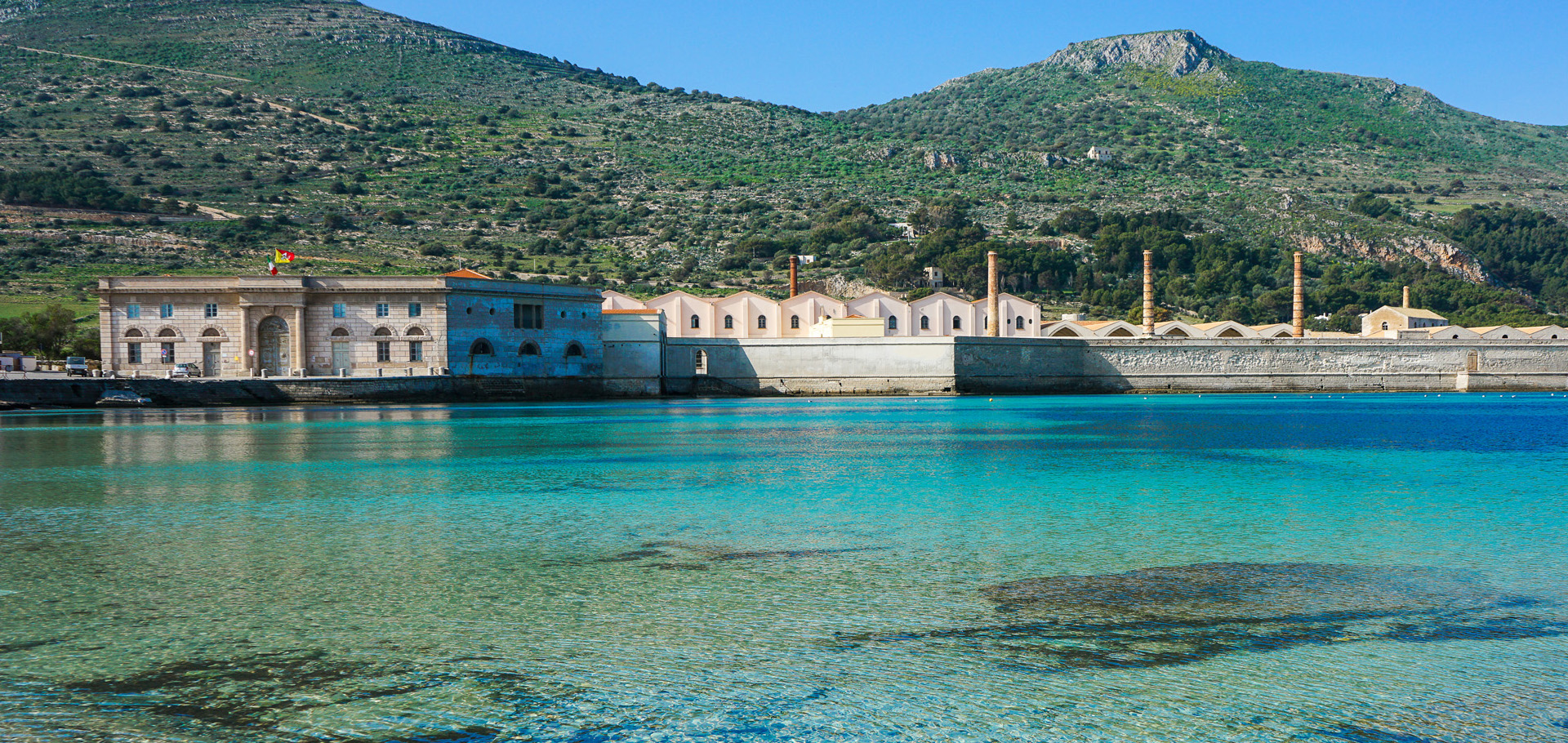
Last but not least is Stabilimento Florio, la Tonnara di Favignana. The most significant industrial tuna-processing plant in the Mediterranean, the Stabilimento Florio was built in the late 19th century by Senator Ignazio Florio (1838–91). > The original core—the "Torino" warehouse—was initially established by Giulio Drago from Genoa on the opposite side of the current harbour, where the old Camparia (storage rooms) once stood. Following the arrival of Ignazio Florio as the islands' new owner, the site expanded dramatically to include vast warehouses, canning rooms, and staff facilities. It even featured an area known as the Camposanto (cemetery), dedicated to drying tuna heads to extract industrial-grade oil.
The creation of the plant provided a renewed impetus for the fishing and marketing of this "bluefin gold" across major national and international markets. This vision was rewarded with immense success, both in terms of global prestige and profit. It is a long and fascinating history that must be experienced firsthand; today, the beautifully restored plant serves as a world-class museum.
From One Beach to the Next
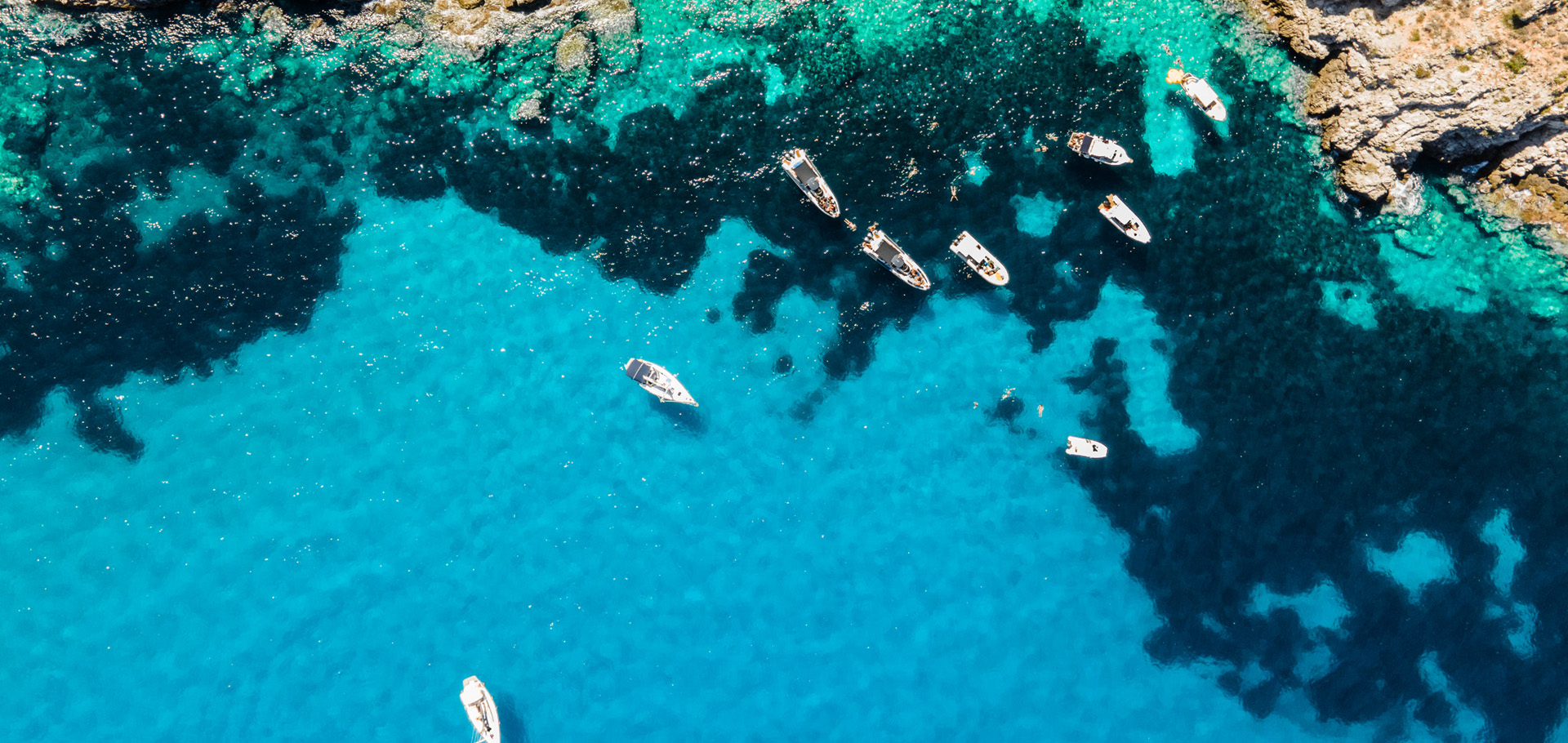
Of all the Aegadian Islands, Favignana offers the easiest access to the sea. The coastline is a stunning succession of hidden coves, emerald bays, sandy stretches, and pebble beaches, framed by rock formations of every shape and size. > Among the sandy beaches, the most prominent are undoubtedly Cala Azzurra—world-famous for its dazzlingly clear waters—and Lido Burrone, one of the few fully equipped beach clubs on the island.
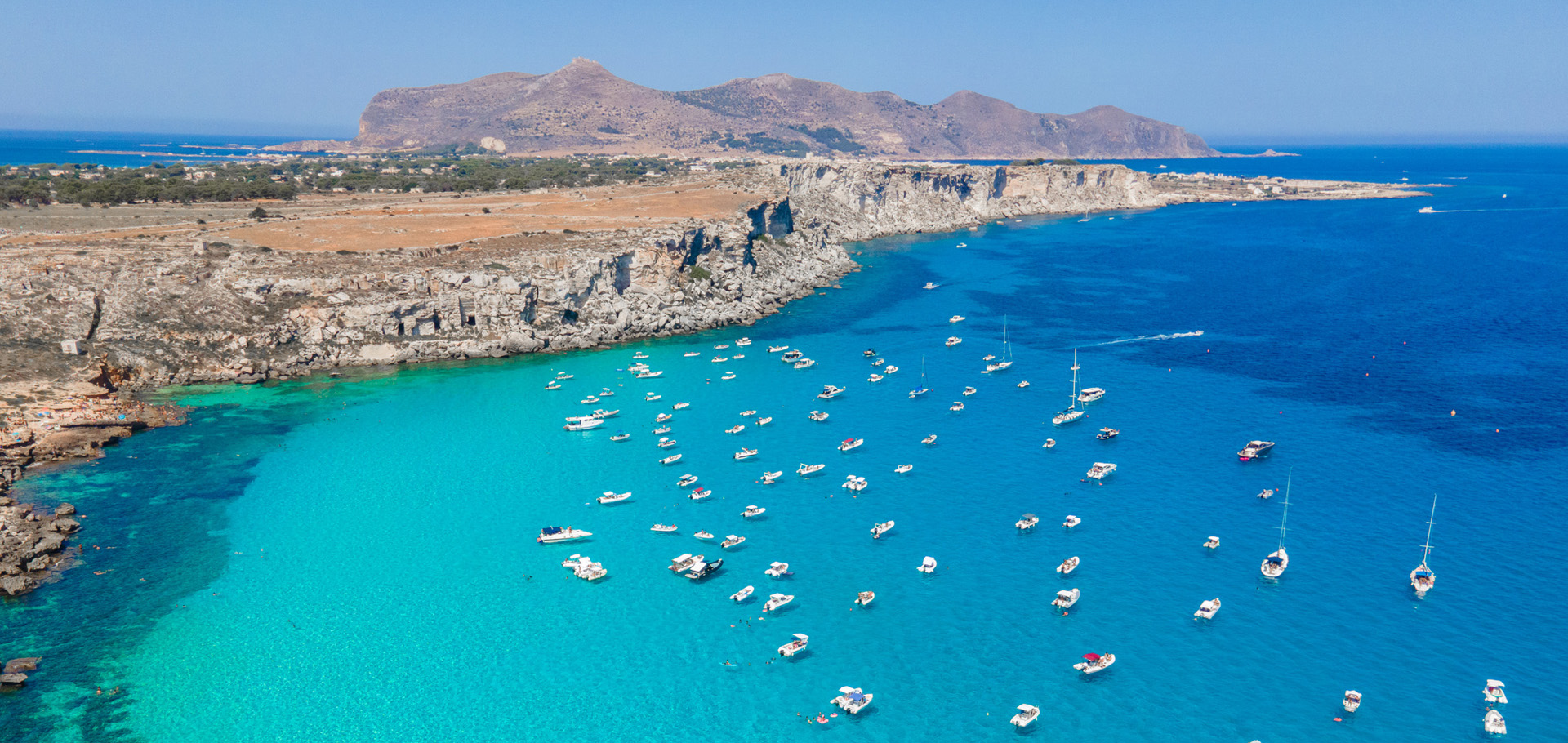
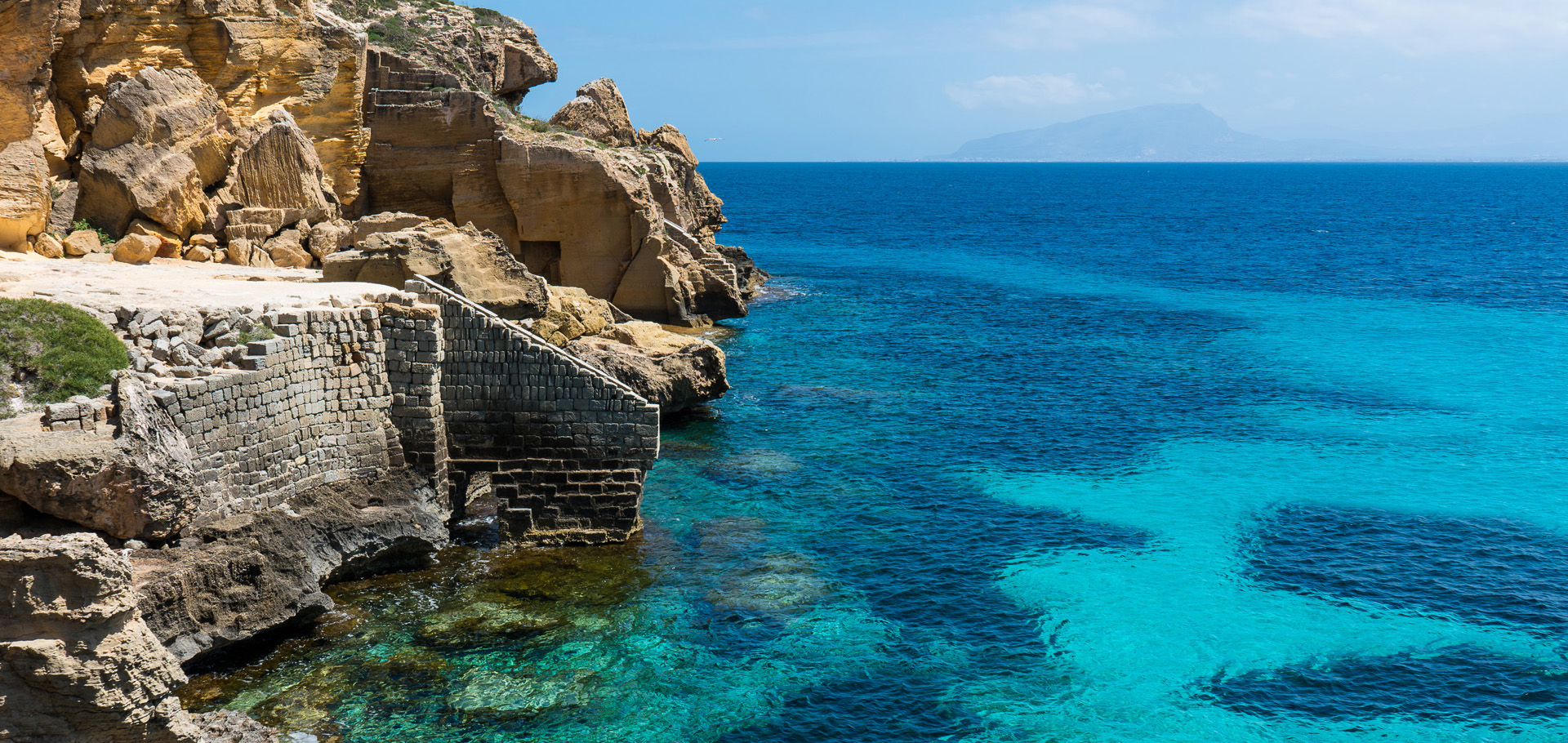
Just a few minutes from the Hotel delle Cave, we highly recommend Scalo Cavallo and Cala Rossa. Scalo Cavallo is a striking natural terrace perched atop a cliff over the sea, sheltered by a rugged rock wall. It is a place of poignant beauty and romance, even when the sea is rough and the gulls circle above; the site is further enriched by a magnificent quarry—a true "cathedral of rock."
Cala Rossa takes its name from the red minerals found in the earth, particularly iron (though local legend poignantly traces it back to the blood shed during the naval battles of the Punic Wars). The waters here are crystalline, and the flat rocks provide the ultimate natural solarium for sunbathing.
Calcarenite Stone: The Quarries and Hypogeous Gardens
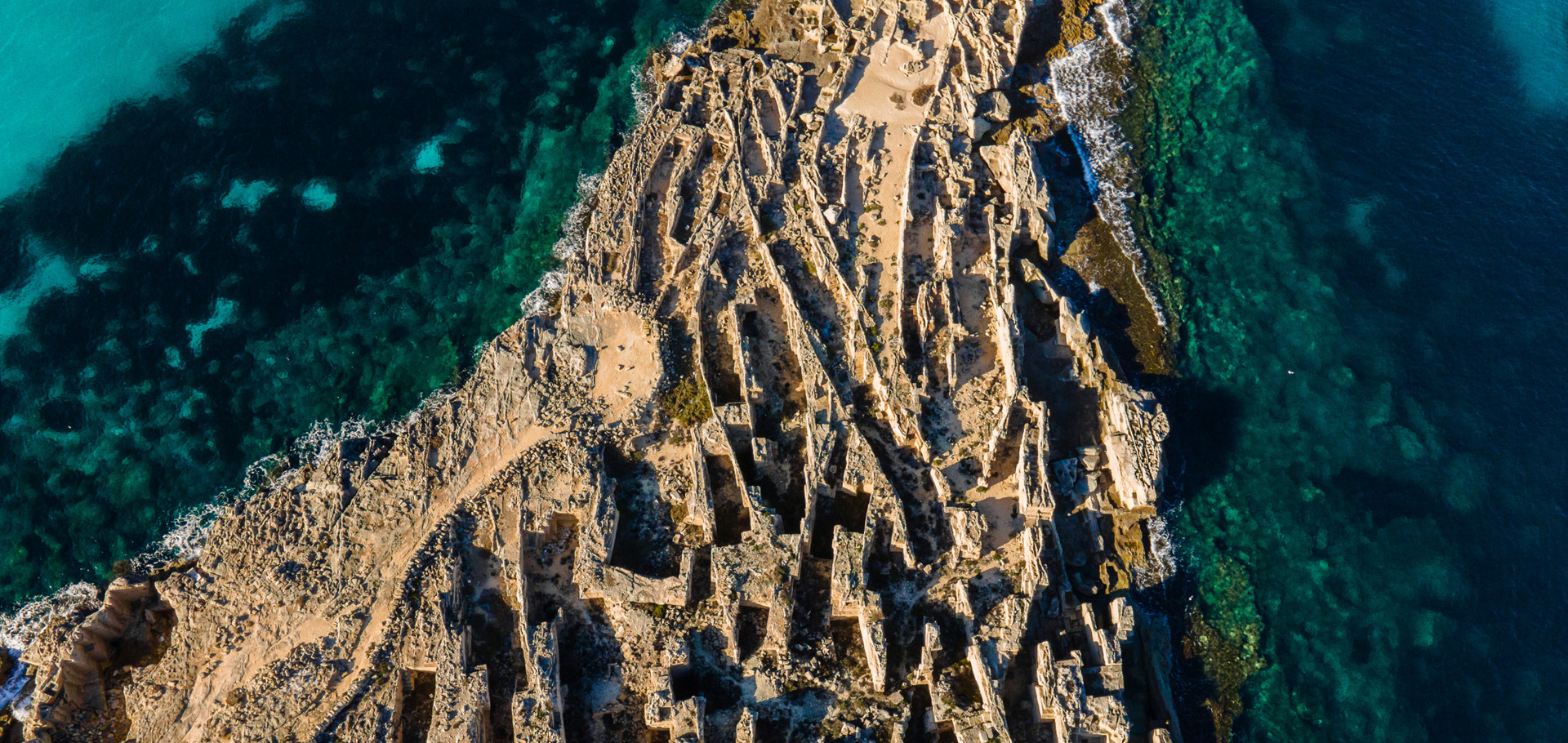
For centuries, the landscape of Favignana has been shaped by the hand of man. The island was literally "hollowed out" to extract its precious stone: calcarenite—a porous limestone locally known as tufo. These Favignana stones were once loaded onto traditional Trapani sailing boats called schifazzi and transported to the ports of Trapani and Marsala, to be used in grand constructions across Sicily and beyond.
Favignana’s calcarenite is highly prized for its fine grain, durability, and a brilliant white hue caused by its high calcium content. The quarrying was so extensive that it remodelled the entire island, both along the coast and inland, creating a hidden world of subterranean tunnels and underground paths. As the quarrying industry gradually declined, the islanders found creative new lives for these abandoned sites. In recent decades, these "scars" in the earth have been transformed into lush vegetable plots, orchards, and citrus groves.
A simple walk across the island reveals quarries of all shapes and sizes lining the roadsides, now teeming with life. Sheltered from the Mediterranean winds and bathed in the Sicilian sun, these sites offer a unique microclimate—warm in winter and refreshingly cool in summer. Known as " Hypogeous Gardens " (Giardini Ipogei), they host magnificent fruit trees, including fig, almond, pear, orange, and prickly pear, flourishing in a truly extraordinary habitat.
PROMOTIONS AND SPECIAL OFFERS
Holiday Offers in Favignana
.jpg&size=1350x900c50)